What Is Industrial Automation? A Beginner’s Guide for Manufacturers
Industrial automation has become an important part of modern manufacturing, processing, and infrastructure projects. It combines electrical systems, control technology, software, robotics, and industrial equipment to improve how facilities operate.
For manufacturers, automation involves using programmed systems to control machinery, monitor processes, and perform repetitive tasks with limited manual input. It can help create a safer, more consistent, and efficient production environment while maintaining control over quality and operational performance. Read along.
Why Manufacturers Invest in Industrial Automation
Manufacturers adopt automation for many reasons. The right system helps businesses manage production demands, improve process control, and support long-term operational requirements.
Improved Production Efficiency
Automated systems help machinery perform repeatable tasks with consistent timing and accuracy. Production lines operate with fewer interruptions, helping facilities maintain output targets and improve workflow.
Automation also allows operators to monitor equipment performance and identify issues before they affect production schedules.
Consistent Product Quality
Manufacturing processes often require precise measurements, repeatable movements, and controlled conditions. Automation systems follow programmed instructions, reducing variations caused by manual handling.
Robotics, sensors, and machine vision systems help maintain consistent production standards across large manufacturing runs.
Enhanced Workplace Safety
Automation allows facilities to manage tasks involving heavy machinery, hazardous environments, high temperatures, or repetitive movements.
Robotic systems, automated handling equipment, and safety controls help reduce worker exposure to high-risk activities while supporting safer production practices.
Better Operational Control
Modern automation systems collect valuable production data. Manufacturers use this information to monitor equipment performance, analyse trends, manage maintenance activities, and improve decision-making.
Systems such as SCADA and industrial data platforms provide operators with visibility across production areas.
The Three Main Types of Industrial Automation
Manufacturers select automation systems based on production volume, product variation, and operational requirements.
Fixed Automation
Fixed automation suits high-volume production environments where equipment performs the same operations. This approach delivers high production rates but offers limited flexibility when products or processes change.
Programmable Automation
Programmable automation supports facilities producing different products in batches. Engineers program equipment to complete different operations depending on production requirements.
This approach provides more flexibility compared with fixed automation while requiring setup time between production changes.
Flexible Automation
Flexible automation uses advanced software-controlled systems that allow quicker changes between products or processes. This approach suits manufacturers managing varied production requirements.
The Four Layers of an Industrial Automation System
Industrial automation systems operate through several connected layers. Each layer performs a specific role within the overall process.
1. Field Level: Sensors and Actuators
The field level includes the physical devices installed on machinery and production equipment.
Sensors collect information such as:
- Temperature
- Pressure
- Position
- Speed
- Flow
Actuators receive control signals and perform physical actions through motors, valves, cylinders, and robotic mechanisms.
2. Control Level: PLC Systems
The control level contains PLCs and other industrial controllers. These devices process information from sensors and execute programmed instructions.
A PLC determines how equipment responds to changing conditions and controls machinery in real time.
3. Supervisory Level: SCADA Systems
The supervisory level uses SCADA software to provide operators with a central view of plant operations.
SCADA systems display production data, manage alarms, record historical information, and support process monitoring.
4. Enterprise Level: MES and ERP Systems
The enterprise level connects production data with business systems.
Manufacturing Execution Systems and Enterprise Resource Planning platforms help manage:
- Production planning
- Inventory
- Scheduling
- Supply chain activities
- Business reporting
This connection allows manufacturers to link factory operations with wider business objectives.
Technologies Supporting Modern Industrial Automation
Industrial automation continues to develop through new technologies that improve flexibility, data management, and process performance.
Robotics and Collaborative Robots
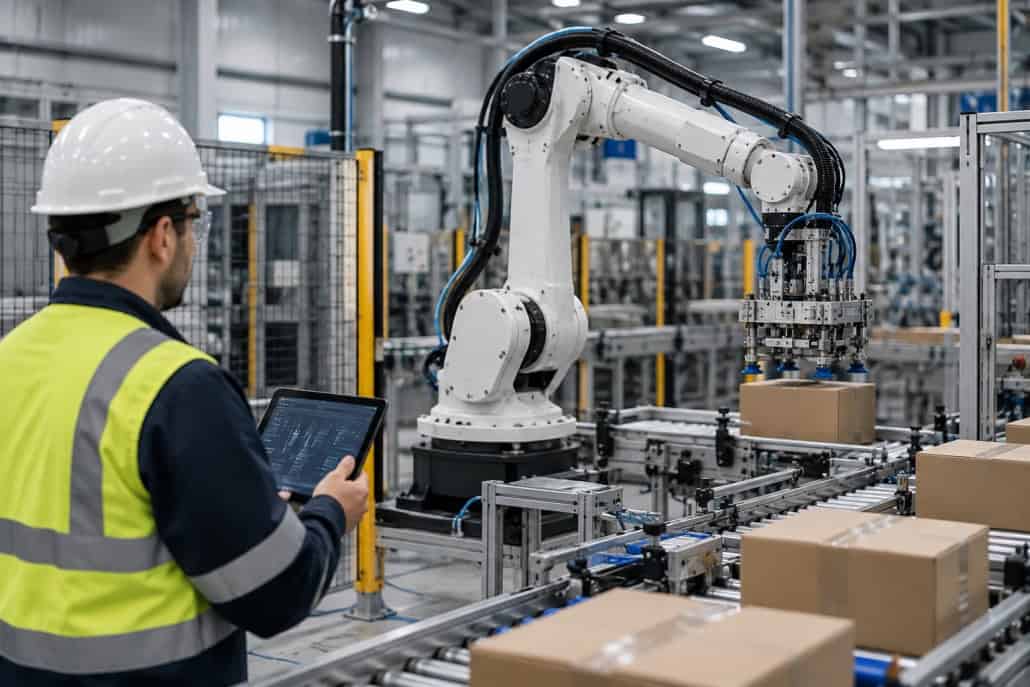
Robotic systems perform tasks such as welding, assembly, packaging, and material handling. Collaborative robots are designed to operate alongside workers in suitable applications.
Industrial Internet of Things (IIoT)
IIoT connects machines, sensors, and control systems through industrial networks. This allows facilities to collect operational data for monitoring, analysis, and maintenance planning.
Machine Vision Systems
Machine vision uses industrial cameras and software to inspect products, measure components, and identify quality issues during production.
Automation Engineering for Australian Industrial Facilities
Industrial automation requires careful planning across electrical design, control systems, safety requirements, and production processes.
ARA Electrical Services provides industrial automation services in Melbourne developed around each facility’s operational needs. Our engineers work across electrical engineering, switchboard manufacturing, installation, and commissioning to deliver integrated systems for industrial environments.
By combining engineering knowledge with practical site experience, ARA can support manufacturers with automation systems designed for reliable operation, maintenance access, and future requirements. Get in touch with our team so we can help you best.
