
PLC vs SCADA: What Is the Difference and How Do They Work Together?
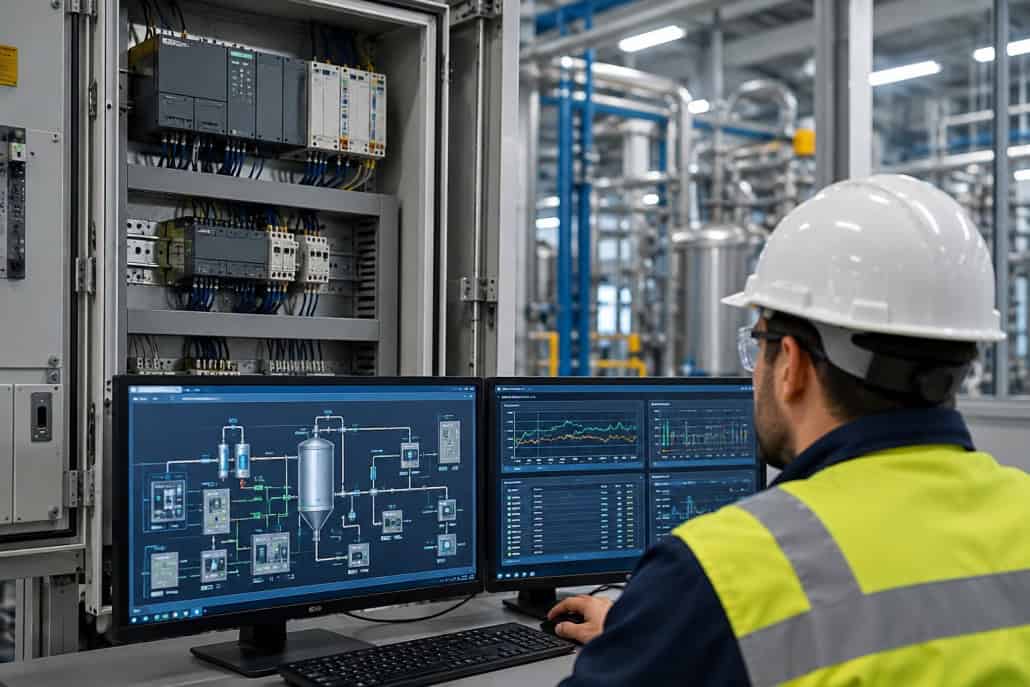
Industrial automation relies on several technologies working together to control machinery, monitor processes, and maintain production
efficiency. Two of the most important systems used across manufacturing and processing facilities are PLCs and SCADA systems.
At ARA Electrical Services, we integrate automation systems as part of broader electrical engineering projects. Our automation solutions include PLC programming services in Melbourne as well as SCADA integration, process control, instrumentation, motor control, and commissioning for industrial facilities across Australia.
Most importantly, understanding the difference between PLC and SCADA can help you select the right control architecture for your operational requirements. Here’s what you need to know.
What Is a PLC?
A PLC is an industrial computer designed to control machinery and automated processes in harsh operating environments. Unlike standard computers, PLCs are built for continuous operation and are designed to handle electrical noise, temperature changes, vibration, and demanding industrial conditions.
A PLC receives information from field devices such as sensors, switches, and transmitters. The controller processes this information using programmed logic and sends instructions to equipment such as motors, valves, pumps, and actuators.
Typical PLC applications include:
- Motor control systems
- Conveyor systems
- Production machinery
- Packaging equipment
- Process control systems
- Safety-related machine functions
A PLC operates with predictable timing, making it suitable for tasks where accurate and fast control decisions are required.
What Is SCADA?
SCADA is a supervisory software platform used to collect, display, and manage information from industrial equipment and control systems.
Unlike a PLC, SCADA does not directly control field devices through physical inputs and outputs. Instead, it communicates with PLCs, remote terminal units, and other industrial controllers through communication networks.
SCADA systems provide operators with:
- Real-time process monitoring
- Graphical displays of plant operations
- Alarm notifications
- Historical data recording
- Performance trends
- Production reporting
For large manufacturing plants, SCADA provides visibility across multiple production areas from a central operating interface.
Key Differences Between PLC and SCADA
Control Function
A PLC performs direct machine control. It receives signals, executes programmed instructions, and controls physical equipment within milliseconds.
A SCADA system focuses on supervision. It collects operational information, presents data to operators, and supports decision-making across the facility.
Hardware and Software
A PLC is a physical control device installed within an electrical panel or control cabinet. It connects directly with sensors, drives, instruments, and machinery.
SCADA is software installed on industrial computers or servers. It communicates with multiple control devices and presents information through operator interfaces.
Operating Scope
PLCs usually manage individual machines, production cells, or specific processes.
SCADA systems operate at a higher level by connecting multiple PLCs and industrial devices across a plant, site, or network of facilities.
Programming and Configuration
Engineers program PLCs using industrial programming languages such as Ladder Logic, Function Block Diagram, and Structured Text.
SCADA systems require configuration of graphical interfaces, data tags, alarm settings, communication links, and reporting functions.
How PLC and SCADA Systems Work Together
Modern industrial facilities often combine PLC and SCADA technologies to create a complete automation system. The process begins at the field level. Sensors collect information such as temperature, pressure, flow rate, or equipment status. The PLC receives these signals and processes them according to programmed control logic.
For example, within a manufacturing process, a temperature sensor might detect a change in operating conditions. The PLC evaluates the signal and adjusts heating equipment to maintain the required temperature.
The PLC then communicates operational data to the SCADA system through industrial networks such as Ethernet/IP, Modbus TCP, or other communication protocols. SCADA converts this information into visual displays for operators. The operator might view production rates, equipment status, energy consumption, or alarm conditions through a graphical interface.
If an issue occurs, the SCADA system alerts the operator. Based on the information displayed, the operator might adjust operating parameters or send commands back through the PLC to modify the process.
PLC and SCADA Integration in Industrial Facilities
Effective automation requires more than installing control hardware and software. The system needs to match the electrical infrastructure, production requirements, safety standards, and operational objectives of the facility.
Need help with PLC electrical solutions in Melbourne? ARA Electrical Services delivers PLC and SCADA solutions as part of integrated industrial automation projects. Our team works across electrical engineering, switchboard manufacturing, installation, programming, and commissioning to ensure automation systems operate within the wider plant environment.
Reach out to PLC programming engineers in Melbourne and we’ll prepare a detailed engineering assessment to determine which system architecture works best.

